CONNECTING WITH NATURE & INSPIRING ACTIVISM: LESSONS FROM YELLOWSTONE
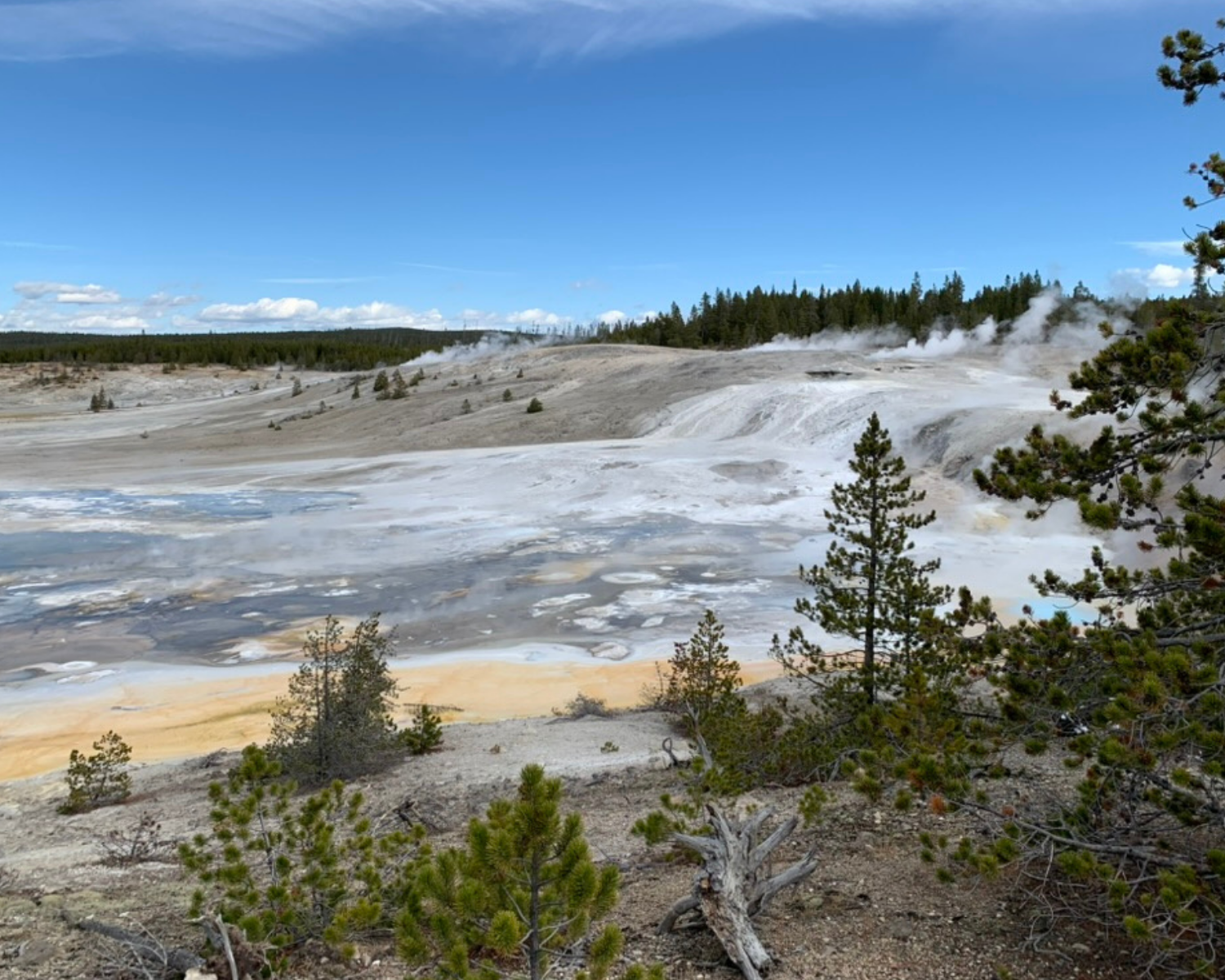
As someone who has exclusively lived in suburbs and cities, the wild plains and boiling geysers of Yellowstone were a pretty extreme change of pace and and an incredibly eye-opening experience. That’s part of the magic of somewhere so unique and so picturesque- driving and hiking through real life postcards and documentary footage isn’t an everyday experience for most of us, and there’s nothing quite like it to infect someone with the environmental activism bug.
It’s been almost 7 years since I visited Yellowstone, and that has me reflecting on America’s National Parks and my connection to them. I truly believe my experience lit a metaphorical spark that led to my interest in environmentalism and climate communication, and I’m certain I’m not the only one who was impacted by the almost alien beauty of the park’s landscapes. I learned a lot about myself, the world around me, and the way we as humans fit into it all. Let’s talk through a few of my biggest lessons.
Lesson 1: Without Intentional Action and Protections, Our Planet’s Most Beautiful Landscapes Would Be Eliminated by Human Greed.
As I went driving down the most remote road I’d ever been on in my life in Yellowstone’s Lamar Valley, I watched herds of bison run through the prairie and wolves stalk along the edge of the woods. The more thriving life I saw, the more clear it became that without intentional action and conservation efforts in places like Yellowstone, American industry would have moved in and destroyed them. It’s a tale as old as European arrival in America and still holds true today- business, ownership, and expansion for the sake of financial gain are forces environmental activists and oppressed people have been fighting for centuries in the US.
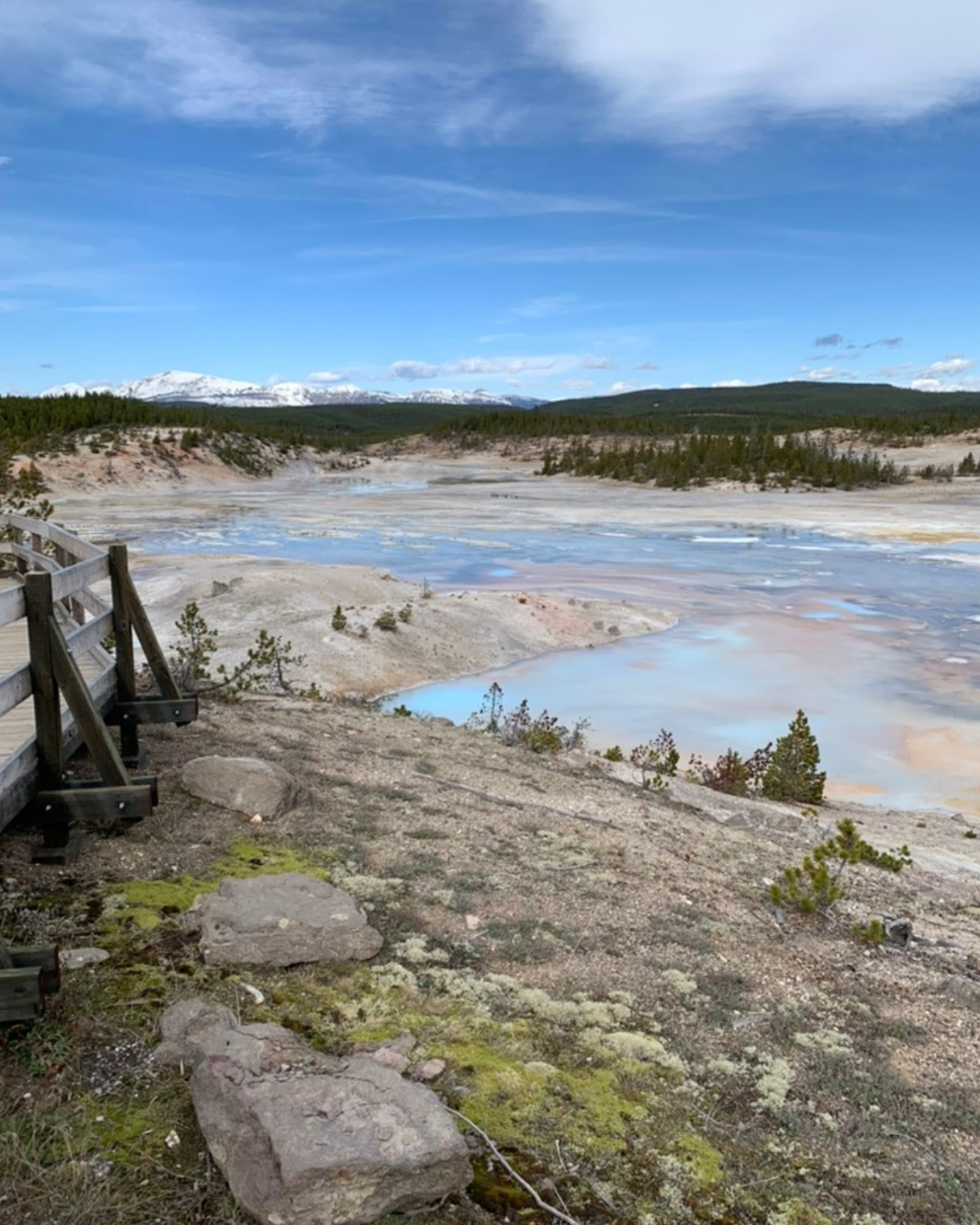
I also couldn’t help but think about the history of the land and the National Park Service- one full of dark details, racism, and exclusion. Yellowstone was the first national park in the US, established in 1872 as part of a growing conservation movement among the American public and a desire to preserve the country's most beautiful landscapes for future generations. However, these lands were not free for the taking by the American government. There were multiple native tribes living on or seasonally hunting on the land who were removed or barred from entering by the Army after the establishment of the park. The “future generations” that were considered in the preservation of the land were exclusively white, and anyone else was not welcome in America’s most beautiful places.
American history is full of what I can only call paradoxes like this one- conservation efforts of the past did work to preserve ecosystems and environments that would have otherwise been damaged, but the forces that would have done the damage were brought by the same people doing the preservation. The native people of Yellowstone were not damaging the environment, but it was forcibly and violently taken from them anyway and protected from and for white people.
This lesson is an upsetting one, but anger at the plights of the past has an important place in the inspirational foundation of environmental activism. No matter how evil people were or are, moving forward and rebuilding an equitable system of conservation efforts in the face of the exclusionary history of its creation are our only options and our absolute duties. It’s up to people from all walks of life to stand together in the fight for environmental justice, protection, and positive change. Diversity in skills, knowledge, and life experience can only add to the success of the movement, regardless of the dividing wars being waged by people in power.
Lesson 2: Wild Animals Need Our Protection and Our Respect- Usually From Afar.
Yellowstone is home to an incredible diversity of mammals, birds, plants, and other critters who make up a robust and thriving ecosystem in the park. From the iconic bison on the plains to the lesser-known species of salamanders in the rivers, park visitors have an abundance of wildlife to observe in their natural habitat.
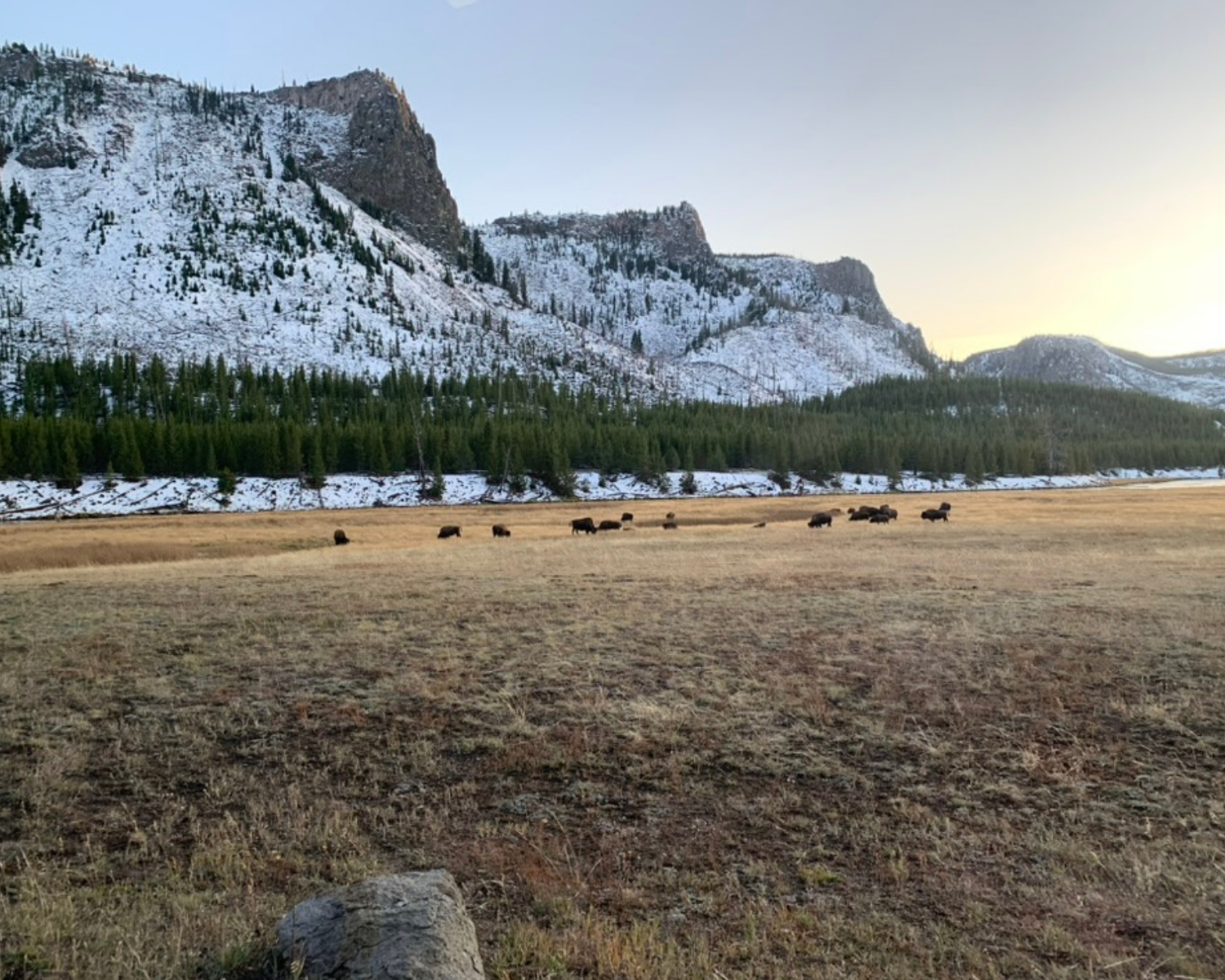
And observe I did. My clearest memories from the trip were seeing wildlife on landscapes largely untouched by humans. I felt like an invader (which, to be fair, I was) sitting in a car far away watching herds of elk jump across rivers and coyotes drink from a stream. They didn’t know- or at least didn’t acknowledge- that there were humans at the top of a hill looking at them, and they were free to live as nature intended them to do. We as humans make such an impact on the environments around us that there are fewer and fewer animals who have an opportunity to do that.
Even in national parks, they don’t always have that opportunity. I witnessed on multiple occasions people ignoring signs and verbal warnings from park staff to give Yellowstone's animal residents space. People got far too close to the bison and elk that live around people-centered hubs of the park, and seemed to believe that a 2,000 pound wild animal was friendly. Every year, there are multiple reports of park visitors being attacked or gored by bison in Yellowstone, and seemingly every single story includes some version of the phrase “the victim got too close”.
These reports serve as great reminders to those of us that spend our time spreading the word about environmental activism- one of the most important things you can do is EDUCATE. Whether through social media, curated events, or just among your friends, humans need reminding that the world is not for us and Mother Nature is not a force to be challenged. My second lesson from Yellowstone was a renewed sense of purpose in advocating for a responsibility that we as individuals all have- to treat the creatures around us with genuine respect and to leave our egos and selfish desires behind.
Lesson 3: Extreme Environments Are Great Reminders and Examples of the Fragility of Life.
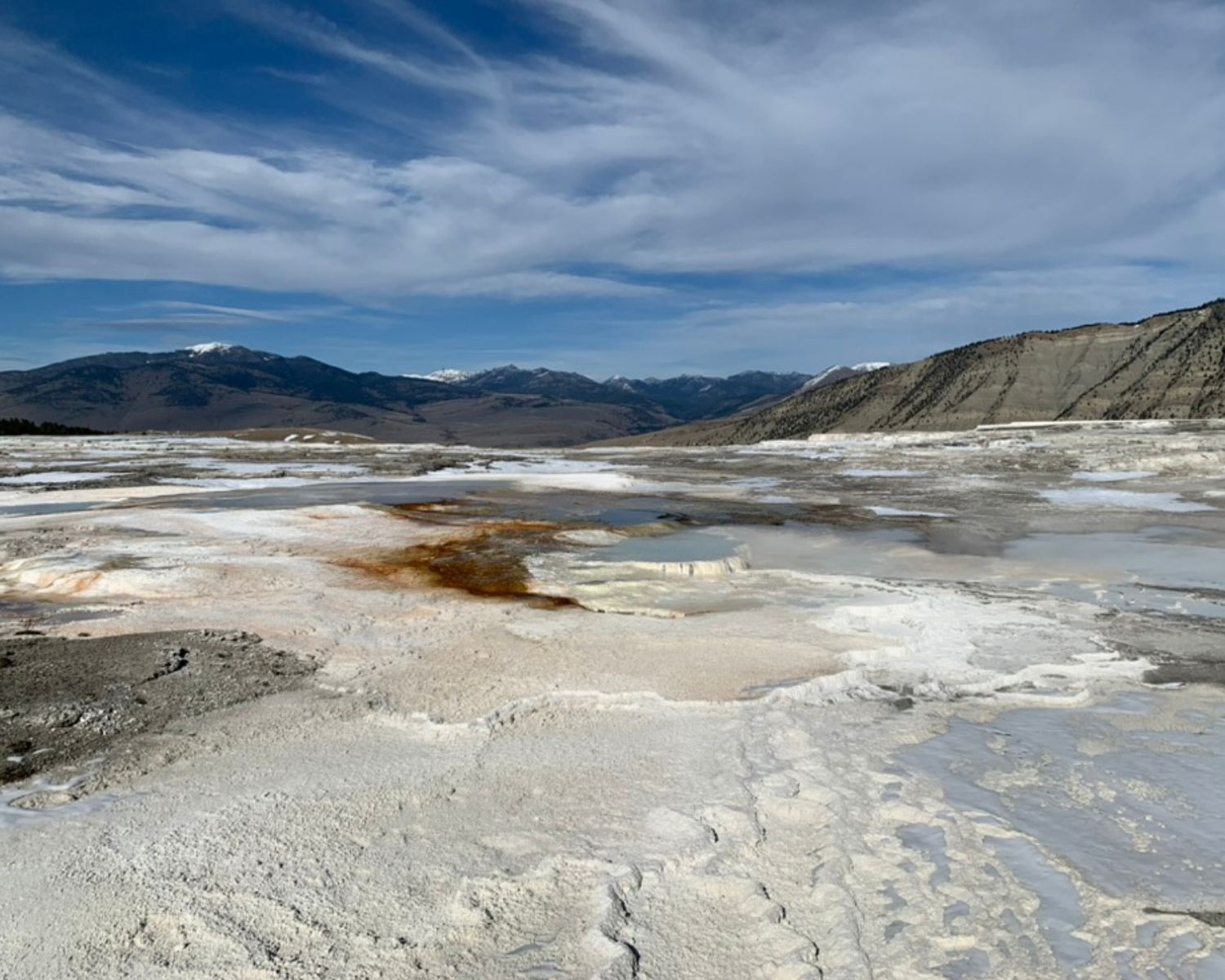
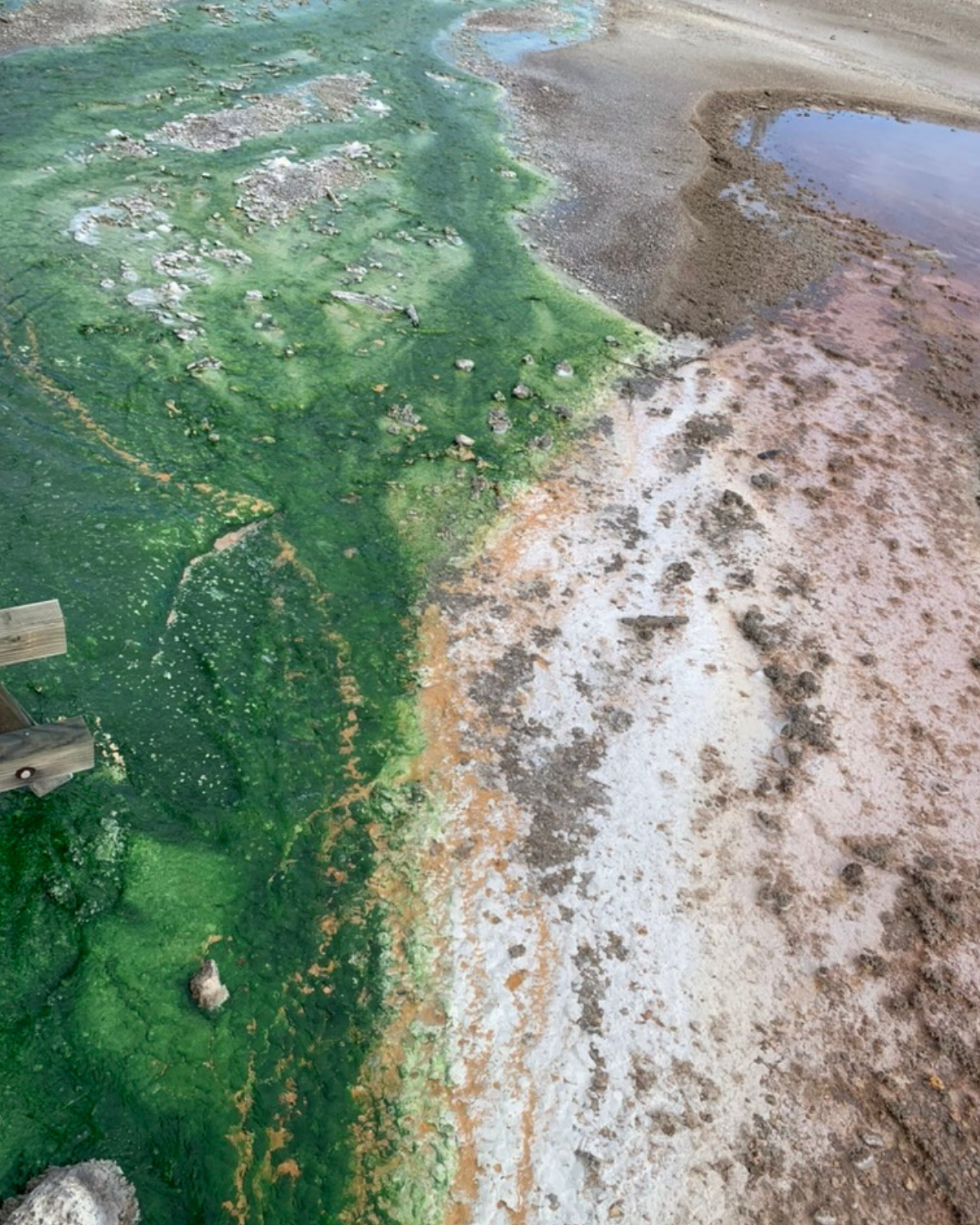
As I stood on the observation deck above one of Yellowstone’s many hydrothermal springs, I couldn’t help but feel like I was on an alien planet. Vast stretches of bright orange and green thermophilic microbe-infested water stretched out before me like the surface of Mars. It was a bizarre feeling that I wasn’t quite used to in my suburban streets back home- the environment around me was harsh, stark, and deeply unwelcoming to a multicellular human like me. I thought I would feel scared of the boiling hot water or maybe get a little squeamish at the oozy patches of bacteria on the ground, but the only feelings that were coming up were humility and awe.
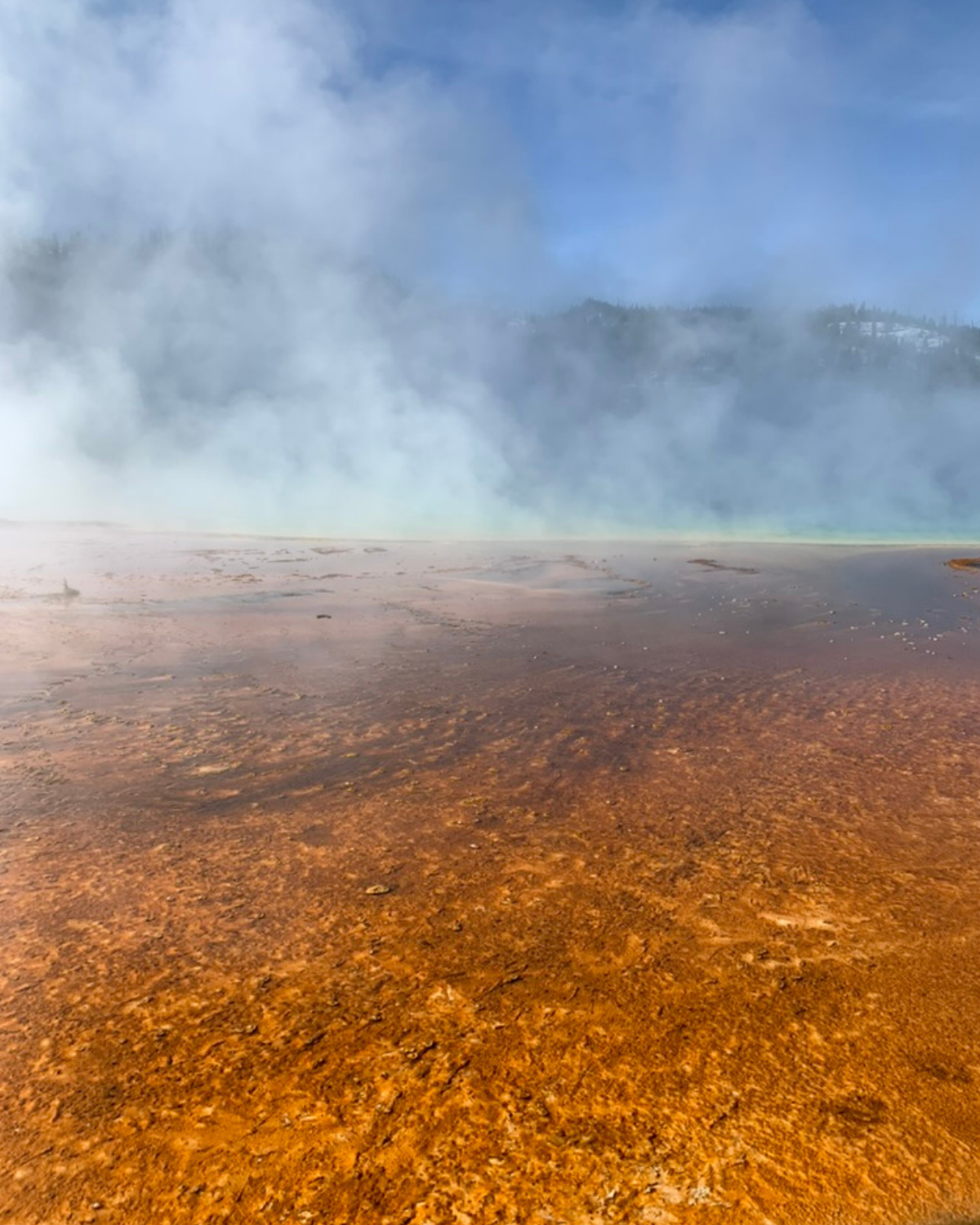
Extreme environments exist all over Yellowstone in the exploding geysers, the acidic boiling mudpots, and the cascading travertine terrace pools. In fact, Yellowstone itself sits atop huge volcanic structures called calderas that fuel the heat and pressure behind the park’s hydrothermal features. Part of this lesson lies in the future of that volcanic system; it probably won’t explode in our lifetime, but it will erupt eventually. The Earth is a wild and intense place, and our ability to go to work, grocery shop, and hang out with our friends hinges on things like supervolcanoes not wiping us all out in an instant.
Even the animals and more familiar versions of non-microbial life don’t have it easy in the park. They may be relatively protected from human and industrial harm, but the circle of life is no stranger to the harsh climate and food chains of the Yellowstone ecosystem. Predators, prey, scavengers, and plant life all work together to create a thriving environment in the park. But, that includes a LOT of death as a natural part of life, whether from predation, accidents, disease, or the freezing cold weather.
The awe and humility I felt standing on that observation deck came from a feeling of smallness and insignificance- not in the “nothing I do matters” way, but in the form of a pretty extreme reality check. We are all a part of the world around us, and Mother Nature gives us constant reminders of the fragility of our place in it. This planet we call home is full to the brim with apex predators, natural disasters, diseases, and all kinds of things that want to and will kill us. Acknowledging that is the key to the most important tools in our arsenal as activists- empathy and connection.
Lesson 4: Connecting with Nature is a Vital Part of Inspiring People to Take Action for the Environment.
Even when I go for a walk around my neighborhood and see a squirrel run into a bush or a dandelion growing out of a crack in the sidewalk, I can’t help but feel a little more connected and fall a little more in love with the world around me. Cheesy, I know, but it’s long been understood that spending time outside is extremely good for our mental and physical health. If spending five minutes standing on a concrete sidewalk in the sun can make a big difference (and believe me, it does), imagine the impact of seeing a postcard-worthy, lush mountain range covered in herds of wild bison.
I know it feels kind of unsavory to make environmental conservation all about us and our health and our desires and our feelings, but both our predecessors and contemporaries have made that the reality. Today’s news is full of examples of politicians, business leaders, and other powerful individuals prioritizing enriching themselves over our literal shared survival- like the recent proposed NPS budget slash of almost $1 billion dollars. As the climate continues to change and more of the healthy kind of “outside” fades away, fostering a connection to the environment and the consequences of our collective actions is more important than ever for every single person on Earth. It is not enough and it is not acceptable to submit to the will of evil people who don’t care about our future, and one of our greatest tools in creating unity against them is the beauty and power of the environments around us.
Yellowstone is one of the most visited national parks in the country, and for good reason- it’s full of unique and incredibly picturesque landscapes you can’t find anywhere else. It’s easy to stop noticing the interconnected ecosystem in the trees and bushes you pass everyday on your way to work, but seeing the connection between the elk and wolves that live in a wild forest in a valley is incredibly educational and inspiring- at least, it was for me. Motivation to make change doesn't come from the mundane, but rather a diversity of experience and environment. A vital and integral part of environmental activism lies in embracing this diversity and bringing it directly to the masses, whether that’s in national parks, in an instagram post, or anything else. Energizing people to notice can and does move metaphorical mountains.
Humans are living things on Earth just like bison or squirrels or thermophilic bacteria, but we’re unique on our planet in one big way- we bend and break the environment to fit our needs instead of living within it. It’s easy to forget that we depend on the health of the ecosystems around us for food, shelter, medicine, and literally everything that allows us to be alive. If humans like us don’t stand up for the planet, other humans are going to destroy it. This was true thousands of years ago, when the national parks were created, last week, today, and it will continue to be true long into the uncertain future. But, we collectively have the tools and the power to make a change and to prevent that destruction. Regular boosts of inspiration are the key to mobilizing the masses in the fight for our planet and our future, and the responsibility of those boosts lies in the hands of activists, creatives, scientists, and everyday people like you.
Sources & Linked Resources:
The Library of Congress: Brief History of the National Park Service
The Henry Ford Museum: Indigenous People at Yellowstone: From Erasure to Inclusion
NBC News: Bison gores man in Yellowstone after visitors get too close
National Park Service: Life in Extreme Heat at Yellowstone National Park
National Park Service: Yellowstone Volcano
Harvard School of Public Health: Spend time outdoors. It’ll improve your health, say experts
National Park Conservation Association: President Trump’s Proposed Budget Takes Axe to National Park Service